EXIM Jobs in India: Top Roles, Skills & Salary Growth for Freshers
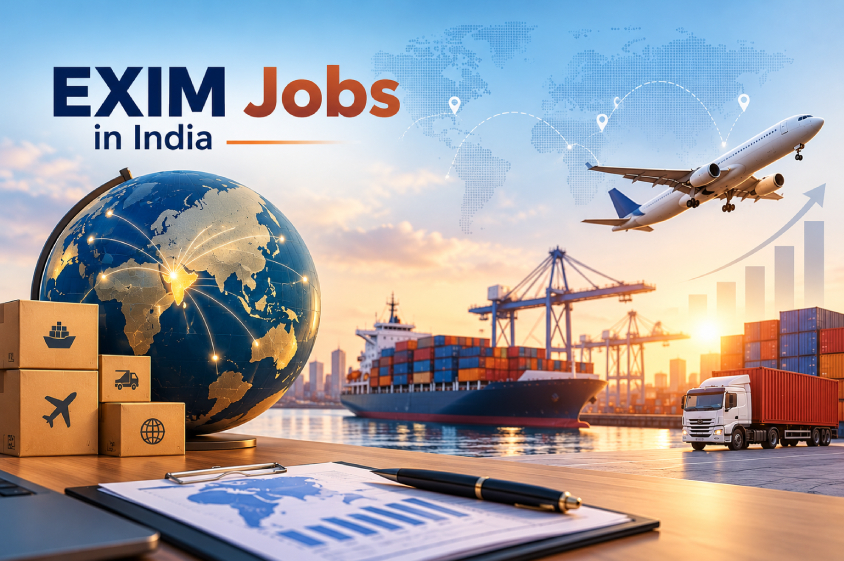
Global trade keeps expanding, and every shipment that crosses a border needs people who understand sourcing, pricing, documentation, finance and logistics. That is where EXIM jobs in India come in. If you are a fresher or a professional looking to switch careers, export-import is one of the few fields where practical skills and the right training can open doors quickly.
This guide covers what EXIM jobs are, the roles available, where to find them, which skills matter, how pay grows, and the courses that make you employable.
Quick answer: EXIM jobs cover roles in exports, imports, documentation, shipping, customs clearance, foreign exchange and international marketing. Freshers usually start in documentation or executive roles and grow with skills, certification and experience.
What Are EXIM Jobs?
EXIM stands for export-import. EXIM jobs are roles in companies and agencies that buy goods from overseas, sell goods abroad, or support that movement through documentation, finance, shipping and compliance.
Import-export executives are typically involved in functions such as pricing, sourcing, financing, market research, supply, freight marketing, documentation and procedure, and foreign exchange.
Why EXIM Careers Are in Demand
Growing global trade, supported by government initiatives, has created strong demand for skilled people who can manage import and export processes. Because international trade is a need for every country, trained professionals are valued across industries, from manufacturing and pharmaceuticals to retail and logistics.
Top EXIM Job Roles in India
| Role | What You Do | Best Suited To |
|---|---|---|
| Export Executive | Find overseas buyers, prepare quotations, follow up orders and coordinate shipments. | Candidates with sales and communication strengths |
| Import Executive | Source from foreign suppliers, raise purchase orders, track shipments and coordinate clearance. | Procurement-minded candidates |
| Documentation Executive | Prepare invoices, packing lists, shipping bills, bills of entry and certificates. | Detail-oriented freshers |
| Shipping & Logistics Executive | Book cargo space, coordinate with shipping lines, forwarders and transporters. | Process and coordination skills |
| Customs Clearance Executive | Handle customs filing, duty calculation and clearance follow-up. | Candidates interested in regulations |
| Export Finance & Forex Executive | Manage payment terms, remittances and foreign exchange documentation. | Commerce and finance graduates |
| Sourcing / International Marketing Executive | Research markets, compare suppliers and support pricing decisions. | Analytical and research-driven candidates |
Where to Find EXIM Jobs
After completing training in export-import management, candidates can find roles in a wide range of businesses, including:
- Import and export departments of companies, and import-export houses
- Trading houses
- Export processing zones and export-oriented units
- Export promotion councils, development authorities and commodity boards
- Supply chain management and logistics companies
- Shipping lines, cargo clearing and handling agents
- Marine insurance companies
- Packaging industries
Many trade professionals also move into self-employment and start their own import-export business after gaining experience.
Skills You Need for EXIM Jobs
| Skill | Why It Matters | How to Build It |
|---|---|---|
| Export-Import Procedures and Documentation | Wrong or missing documents cause delays and penalties. | Course on export procedure and documentation |
| Customs and GST Knowledge | Duties and taxes affect cost and compliance. | GST course and customs clearance training |
| Incoterms | They decide who pays for and bears risk at each stage of delivery. | Incoterms 2020 training |
| Foreign Exchange and Payments | Payment terms and currency risk shape every deal. | International trade programmes |
| Communication and Negotiation | You deal with buyers, suppliers and agents across time zones. | Practice, mock sessions and live projects |
| MS Excel and ERP Basics | Order tracking, costing and reporting depend on them. | Self-practice and on-the-job exposure |
Salary and Growth in EXIM Careers
Import-export management executives can expect competitive pay, and growth tends to follow skill depth. Rather than a fixed figure, these are the factors that most influence earnings:
| Factor | How It Affects Pay and Growth |
|---|---|
| Skills and Certification | Candidates with documented training in export-import, customs and GST usually progress faster than those with general degrees alone. |
| Industry | Sectors with heavy international trade, such as manufacturing, pharma and logistics, tend to offer wider roles. |
| Company Type and Size | Large exporters, shipping lines and multinational firms generally offer structured growth paths. |
| Location | Port and trade hubs offer more openings and exposure. |
| Experience and Specialisation | Specialising in areas like customs, export finance or sourcing opens senior roles. |
Salary ranges vary widely by employer and role, so compare current offers on job portals rather than relying on a single average.
How Freshers Can Start an EXIM Career
- Choose a direction. Decide whether you prefer sales, documentation, logistics, finance or sourcing.
- Learn the fundamentals. Study export-import procedures, documentation, Incoterms, GST and foreign exchange.
- Take a recognised course. A structured diploma or certificate gives you both knowledge and a credential.
- Get practical exposure. Look for industrial visits, live documentation practice and internships.
- Build a trade-focused CV. Highlight your course, tools you know and any documentation you have prepared.
- Apply across industries. Target exporters, forwarders, shipping lines and trading houses, and use placement support where available.
Courses That Help You Get Hired
NIFT India offers a range of programmes aligned with EXIM roles. The recognitions below are as listed on NIFT's website.
| Programme | Best For | Learn More |
|---|---|---|
| Diploma in Export Import Management | Freshers and career-switchers who want a complete foundation | Export Import Management |
| Advanced Certificate in International Trade | Those targeting trade and international business roles | International Trade Courses |
| Certificate Course on Customs Clearance & Freight Forwarding | Candidates aiming at clearance and forwarding roles | Customs Clearance & Freight Forwarding |
| Course for Custom House Agent | Those planning a CHA career | Custom House Agent |
| Diploma in Supply Chain Management | Those interested in logistics and supply chain roles | Supply Chain Management |
| Certificate Course on GST | Professionals handling export-import taxation | GST Course |
Growth Path in EXIM
| Level | Typical Roles |
|---|---|
| Entry | Documentation executive, export/import executive, shipping assistant |
| Mid | Senior executive, logistics coordinator, export finance executive, sourcing specialist |
| Senior | Export-import manager, logistics manager, compliance head |
| Entrepreneur | Own export-import or trading business, consultancy or clearing firm |
Mistakes to Avoid When Starting in EXIM
- Ignoring documentation skills and focusing only on sales.
- Choosing a course without checking its recognition, faculty and placement support.
- Not learning customs and GST basics.
- Applying only to one type of employer instead of exploring forwarders, trading houses and shipping lines.
Frequently Asked Questions
Can freshers get EXIM jobs in India?
Yes. Documentation, executive and coordination roles are common entry points, and training in export-import procedures improves your chances.
Do I need a degree in international trade?
Not necessarily. Graduates from commerce, business, science and other streams enter the field, and a diploma or certificate in export-import management helps fill the knowledge gap.
Which course is best for EXIM jobs?
The Diploma in Export Import Management offers the broadest foundation. If you want a specific path, customs clearance, GST or supply chain courses add specialisation.
Can I study while working or while in college?
NIFT's FAQ page states that students can do its diploma courses in parallel with graduation, and it offers offline and online options.
Can I start my own export-import business instead of taking a job?
Yes. Many trade professionals build experience in a job first and then move to self-employment.
Start Your EXIM Career Today
EXIM jobs in India reward people who combine practical knowledge with the right credentials. Choose a role, build the core skills, and get trained by people who work in the industry.
Next step: Explore NIFT's Export Import Management courses, review the placement record, or talk to the NIFT team to pick the right batch.